Alkalai House
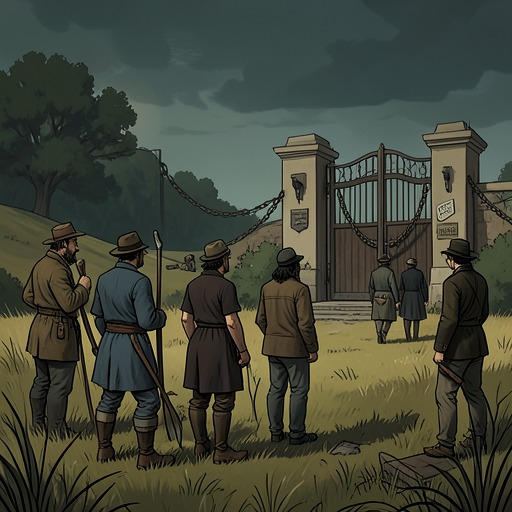
Black BoxAlkalai House is a Jewish property in the Jewish Quarter of the Old City in Hebron, seized by force during the 1929 Palestine riots. Its proposed purchase and renovation become more than a property transaction: the effort is presented as a way to reclaim a lost Jewish holding through payment, while also drawing private wealth into a religious and political project.
Location and History
A letter to Alexander A. Gideon describes Alkalai House as a Jewish property in Hebron that Arab rioters seized in 1929. The writers say they are trying to repossess it by paying its full market price, rather than by violence. The account thus makes the proposed recovery depend on a distinction between the original seizure and the present-day means of reclaiming the property: a negotiated purchase.
The letter requests $95,000 toward the house’s purchase and renovation. It sets that request alongside other financial needs, including money to pay off a mortgage, add a room and a half, and provide for the family’s son and daughter. Those household requests amount to $180,000; the proposed contribution to Alkalai House is additional. The appeal therefore places the property within a larger request for financial support without treating its purchase as merely another family expense.
A Religious Appeal for Money
In a later letter, Michel Sommo interprets the amount sent by Gideon—$107,000 in Israeli pounds, paid in three unequal installments—as evidence that Gideon had abandoned the contribution to redeem Alkalai House. Sommo renews the request, now asking for $120,000 for what he calls a sacred cause. He links the proposed donation to Gideon’s repentance and to the hope that divine compassion might help Boaz return safely, while acknowledging that he cannot claim to understand divine justice.
This appeal gives the property a role in a moral argument between the men. Sommo connects Gideon’s alleged wrongs, the sufferings of Boaz and Boaz’s mother, and the prospect of restoring the Hebron property. He also imagines that Gideon’s son might one day live beneath its roof, so that the donation could become part of a future redress. The requested purchase money is thus framed both as support for a land-recovery effort and as a possible act of atonement.
Political and Commercial Context
The proposed recovery sits within Michel Sommo’s broader political activity. A report describes his work before the Six-Day War campaigning for military initiative, followed by his involvement in the Greater Israel Movement and, later, the Jewish Fellowship Movement. The latter took part in efforts to purchase land around Bethlehem, alongside demonstrations against troop disengagements in the Sinai Peninsula and the Golan Heights. These activities make the appeal for Alkalai House part of a wider pattern in which land transactions and political objectives overlap.
A later letter from Gideon reveals another land scheme involving Sommo: a proposed exchange connected to fields west of Bethlehem, land belonging to a Christian religious order headquartered in Toulouse, and a substantial building with adjoining land within Israel’s pre-1967 borders. Gideon identifies a Paris-based financier as supporting the arrangement and says Sommo’s restored French citizenship provided a legal basis for a transaction from which the financier preferred to remain formally separate. This is a distinct proposed transaction, not the purchase of Alkalai House, but it places the Hebron appeal amid Sommo’s wider efforts to use property deals in pursuit of territorial and religious aims.
Place in the Novel
Alkalai House is presented through letters, reports, and arguments about money rather than through a narrated visit to the property. Its physical history is brief but consequential: a house seized in the past becomes the object of a present effort to reclaim it through a purchase. The competing accounts also expose the pressure placed on Gideon’s fortune, as Sommo casts a donation as simultaneously a political contribution, a sacred duty, and a possible means of answering personal wrongdoing.
The house consequently gathers together the novel’s concerns with land, inheritance, and moral responsibility. Sommo’s appeal insists that property can carry a claim beyond its market price; Gideon’s correspondence, meanwhile, situates that claim among negotiations, financial backers, and other proposed land transfers. Alkalai House stands at the point where the language of redemption meets the practical demands of funding a purchase.